- Rocket Lab challenges NASA’s decision to award a $700 million contract to Blue Origin for a Mars telecommunications orbiter.
- The company argues that NASA’s evaluation process overlooked critical eligibility criteria mandated by Congress.
- Shares of Rocket Lab have fluctuated significantly amidst the controversy and subsequent protest.
- Blue Origin’s project deadline is set for December 31, 2028, with operations expected by the end of 2030.
- Rocket Lab highlights its own technological capabilities as a compelling reason for reconsideration.
Rocket Lab has formally lodged a protest against NASA’s recent decision to award a lucrative contract for a Mars Telecommunications Network to Blue Origin, contending that the selection process was skewed and violated established eligibility criteria. The contract, valued at $700 million, is intended for the design, construction, and launch of a high-performance communications orbiter to support future Mars missions.
In its complaint, Rocket Lab claims that NASA’s review process was “punitive” and rife with inaccuracies, particularly regarding technical evaluations of their bid. The company stated that NASA’s assessment contained “incorrect assertions and conclusions” that could undermine fair competition in the sector. By pursuing a formal review through the U.S. Government Accountability Office, Rocket Lab aims to ensure transparency and adherence to procurement standards that safeguard public investment and promote equal opportunities for all bidders.
Eligibility for the contract necessitated that competitors had to be U.S. commercial entities that received prior NASA funding for a Mars Sample Return study within fiscal years 2024 or 2025. Notably, Rocket Lab argues that its architecture included a dedicated communications orbiter, an offering it claims to be unique among bidders. Nevertheless, Blue Origin also benefitted from NASA funding, raising questions about the fairness of the selection process.
NASA’s commitment to Blue Origin mandates the delivery of the Mars orbiter by December 31, 2028, with operational capability aimed for late 2030. The urgency of the contract stems from the aging infrastructure of NASA’s current Mars relay systems, which are becoming increasingly outdated, having been launched as far back as 2001.
Rocket Lab has touts its credentials through the successful deployment of the Escapade spacecraft for NASA—an endeavor that demonstrates its capacity to deliver interplanetary hardware on a stringent timeline. However, despite its promising technological capabilities, shares of Rocket Lab (RKLB) slipped during overnight trading, reflecting broader investor concerns regarding the company’s future and prospects.
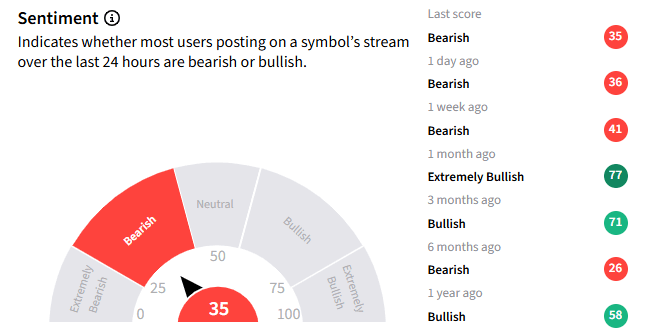
Retail sentiment surrounding RKLB has turned bearish in recent weeks, as evidenced by discussions on platforms like Stocktwits. Some traders express skepticism about the firm’s pricing pressure and timeline challenges, citing factors such as ongoing developments on the Neutron rocket, which have left investors apprehensive about the company’s short-term trajectory. After closing 2% higher at $62.95 last Friday, shares fell further, marking its fifth consecutive weekly decline.
As the space industry continues to evolve, the ramifications of this dispute could shape the competitive landscape for years to come. The outcome may hinge not just on Rocket Lab’s arguments but also on the continued variations in NASA’s procurement strategies moving forward.
Interestingly, the Mars Telecommunications Network represents a critical piece of infrastructure for future exploratory missions, particularly in establishing a supportive framework for human exploration of Mars—a goal that continues to be of paramount interest to both NASA and commercial partners.
Related Posts
- Exploring macOS Golden Gate: Top 10 Must-Try Features
- Many Drivers Miscalculate True Expenses of Car Ownership
- Why ChatGPT Ads Must Be in Your 2027 Media Plan — Boost ROI & Targeting
- BYD Expands Production to Europe, Aiming to Establish Itself as a Local Truck Manufacturer
- FTSE Bargain Hunt: Are Tesco or Greggs Shares the Best Value Investment Today?